- 東京都健康長寿医療センター(研究所)
- English
- Organization
- From the President
From the President
Since the establishment in 1972, the Tokyo Metropolitan Institute of Gerontology has been engaged in research aimed at addressing various challenges posed in the era of super-aging society. As of April 2026, the Institute comprises full-time staff members, along with part-time staff and graduate students, totaling approximately 260 researchers.
In the first mid-term plan (2009-2012), we promoted "research to support medical care and long-term care for older adults," producing numerous achievements. In the second mid-term plan (2013-2017), we advanced "research aimed at maintaining and promoting health and enhancing vitality among older adults." In 2013, we relocated to a new research facility and introduced a wide range of advanced research equipment, including PET-CT and super-resolution microscopes. This enabled significant progress in areas such as "early detection of dementia," "development of training systems for physicians and nurses," and "development of various biomarkers related to aging and geriatric diseases." As a result, the Institute has consistently achieved one of the highest acceptance rates nationwide for competitive research funding, particularly grants from the Ministry of Health, Labour and Welfare and the Ministry of Education, Culture, Sports, Science and Technology.
In the third mid-term plan (2018-2022), we promoted "research aimed at extending healthy life expectancy and improving quality of life among older adults." Specifically, we focused on research to overcome geriatric syndromes such as sarcopenia, frailty, and dementia; research to support community-based living for older adults; and initiatives to strengthen leadership in gerontological research. In addition, we established the Healthy Aging Innovation Center (HAIC) to promote translational research integrating clinical and basic sciences.
In the fourth mid-term plan (2023-2027), we are promoting the "Health Promotion Research Project" to shift geriatric medicine from the conventional "curative model" to a model of "cure and support," aimed at maintaining and restoring functional ability in older adults.
Currently, in the natural sciences division (Deputy Director Ishigami), we are focusing on research into the mechanisms underlying the onset and pathophysiology of geriatric diseases such as vascular disorders, cancer, dementia, and diabetes; research on prevention and treatment; elucidation of mechanisms of aging and age-related diseases; development and clinical application of novel diagnostic and therapeutic approaches; investigation of the mechanisms underlying geriatric syndromes such as sarcopenia and frailty; and development of early diagnostic, preventive, and therapeutic methods. We are also advancing the development and application of new image analysis techniques using PET and biomarker-based early diagnostic methods for dementia.
In the social sciences division (Deputy Director Fujiwara), we aim to realize healthy longevity and well-being by conducting research on dementia and frailty through five long-term longitudinal studies, in collaboration with the "Integrated Research Initiative for Living Well with Dementia" and the "Center for Comprehensive Care and Research on Prefraility". We also promote research on "social isolation and loneliness", "elimination of health disparities", "prevention, and coexistence".
A key strength of the Institute lies in its active interdisciplinary approach, involving collaboration among natural scientists, social scientists, physicians, nurses, pharmacists, and other healthcare professionals. As the super-aging society continues to advance, the research challenges are increasing. All the members of the Institute are committed to pursuing the research. We sincerely appreciate your continued support.
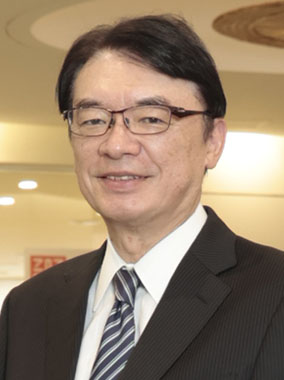
President of Tokyo Metropolitan Institute for Geriatrics and Gerontology